- Before Munna Bhaiyya & Compounder, They Were College Bros: Abhishek Banerjee & Divyenndu’s 23-Year-Old Bond Comes Full Circle
- Can Akshay Kumar Be Deemed The Milestone Man?
- “छठी मैया के साथ जो जुड़ाव मैंने महसूस किया, उसे शब्दों में बयां करना मुश्किल है”: तमन्ना भाटिया
- Tamannaah on Studying the Relevance of Chhath for Chhathi Maiya Song from The Vvaan: I spent time studying and understanding the significance of the ritual
- 15 Characters That Define Akshay Kumar’s Extraordinary Career

Can Akshay Kumar Be Deemed The Milestone Man?
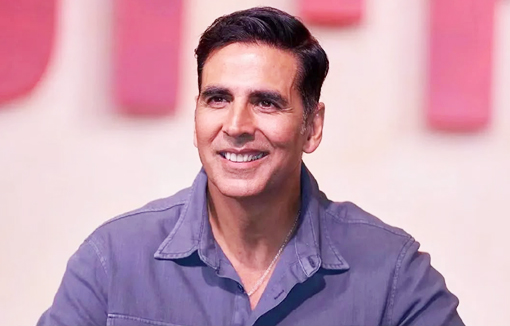
It is customary for an actor to become a star and then spend the next 20 years protecting the image that made him famous. Akshay Kumar, however, has never really played that game.
His career is interesting because he has spent three decades doing the opposite. He became a star through action, discovered comedy almost by accident, turned himself into one of Hindi cinema’s most dependable comic performers, moved into conscientious dramas and thrillers, embraced socially driven subjects and then kept switching lanes whenever it seemed like the audience had him figured out.
- The action star who made physicality his calling card
KhIiladi in 1992 gave Akshay his breakthrough and established the image that would dominate his first decade – the athletic, fearless action hero who could actually do the physical work. Mohra, Main Khiladi Tu Anari, Khiladiyon Ka Khiladi and Jaanwar kept strengthening that identity. His action was never entirely about looking cool. There was stunts and agility and that became part of the Akshay Kumar brand. The Khiladi image could easily have become a prison. Instead, it became the first act.
The Comic Force
If Khiladi made Akshay a star, Hera Pheri made him a different kind of actor. Comedy was not even the obvious next step for an actor whose image had been built on action. Akshay himself has spoken about how he did not think he could do comedy before Hera Pheri. The film became the turning point, with Raju revealing a completely different performance instinct. What followed was extraordinary – Phir Hera Pheri, Garam Masala, Bhagam Bhag, Bhool Bhulaiyaa, Welcome, Singh Is Kinng and eventually the Housefull franchise. Akshay did not merely add comedy to his repertoire. He became one of the defining comic stars of his generation. And the most impressive part is that he did it without abandoning the action star. He simply made room for another one.
Be versatile and try it all
Akshay’s best career decision may have been refusing to behave as though versatility and stardom were opposites.
He could go from Hera Pheri to Dhadkan, from Ajnabee to Namastey London, from Garam Masala to Special 26. He could play a romantic hero, a comic fool, a villain, a cop, a conman or a man with a social cause without treating any one of those identities as a permanent brand.
Even Ajnabee, where he played the antagonist Vikram Bajaj, was an important signal. Winning the Filmfare Award for Best Villain for the performance meant that Akshay was willing to let the role, rather than the conventional hero image, lead the choice.
Reinvention is key
Special 26 is one of those films that looks important in hindsight because of what it ushered in for Akshay. He played the robust Ajay Singh, who was controlled, intelligent and quietly authoritative. The film gave him the kind of restrained leading-man performance that would become increasingly important to his career. It also released at a point when Akshay was beginning to move decisively towards more grounded material. Baby, Airlift, Rustom and the films that followed showed a star increasingly interested in characters defined by competence rather than flamboyance.
The taboo tales
Akshay did not simply go from commercial cinema into serious cinema. He tried to make serious subjects commercial.
Toilet: Ek Prem Katha took sanitation and open defecation into a mainstream love story. Pad Man put menstrual hygiene at the centre of a commercial Hindi film. Gold turned India’s hockey history into a sports drama. Mission Mangal made the Mars mission the subject of a mainstream ensemble film.
You cannot ignore his risk-taking abilities and that is where the nature of his films transformed. He ensured that his social responsibility as a star showed in his work. Akshay understood that the biggest asset is not simply the ability to open a film. It is the ability to make an audience curious about a subject they might otherwise never have paid to watch.
Comedy franchise
The Housefull films are not usually discussed alongside Special 26 or Airlift when people talk about Akshay’s career evolution. They should be. Because comedy became its own commercial ecosystem for him. Housefull arrived in 2010 and became a franchise, allowing Akshay to repeatedly return to the kind of broad, ensemble comedy that had already become one of his signatures. Even after moving into socially conscious and dramatic cinema, he never treated comedy as a phase he had outgrown. That is another Akshay trait – he does not seem embarrassed by the things that made him popular. He owns it and thrives in it!
Volume speaks volumes
Akshay’s career has also been defined by his work ethic. There was a period when releasing several films a year became part of his identity. Between 2000 and 2010 alone, he appeared in 45 films, according to India Today. The strategy came with obvious risks. Not everything worked. There were stretches of underperforming films, and the sheer volume sometimes meant uneven results. But it also meant Akshay was constantly experimenting in public. Few stars have been willing to fail this frequently while continuing to change direction.
Reinventing forever
His milestones are not one blockbuster, one award or one iconic character. He tries it all. As he said on a chat show, kaam ko kaam khichta hai….His ability to show up at work is his most winsome trait. The willingness to go back to comedy, take risks, collaborate with filmmakers across genres and start another chapter when the previous one was already successful. Akshay Kumar’s greatest trick has been convincing the audience to come along every time he tries something different.
The real milestone of his career goes beyond the fact that he has survived three decades of Bollywood as a top star. Even after 30 years, there is still no single version of Akshay Kumar that tells the whole story.