- India’s $245 Billion FMCG Sector Gets New ESG Risk & Opportunity Framework by Aspire Circle and Aspire Impact
- शिक्षक दिवस पर शिक्षकों के सम्मान में शेरेटन ग्रैंड पैलेस इंदौर में विशेष ब्रंच
- ‘दायरा’ के मलयालम वर्जन में करीना कपूर खान की ‘अजूनी’ को अपनी आवाज़ देंगी पार्वती थिरुवोथु!
- When Danny Pandit Picks a Trend, Pop Culture Takes Notice
- सिद्धार्थ मल्होत्रा और तमन्ना की फ्रेश जोड़ी ने ‘द वन’ के ‘समझो ना’ से मचाई धूम, दर्शकों ने कहा- ‘ब्लॉकबस्टर जोड़ी’!

India’s $245 Billion FMCG Sector Gets New ESG Risk & Opportunity Framework by Aspire Circle and Aspire Impact
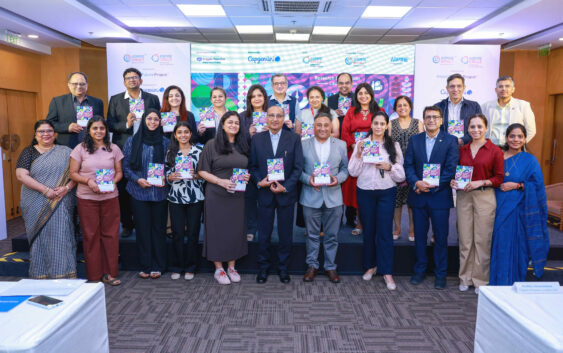
Packaging, water stress and supply chains emerge as key ESG risks for India’s FMCG sector; circularity offers opportunity: Aspire Impact Report
Mumbai, September 3, 2026: Aspire Circle and Aspire Impact have launched “Fast Moving Consumer Goods: An ESG Performance Framework,” a new research publication under the Impact Future Project (IFP), a thought-leadership initiative supported by Capgemini. The publication brings together 19 senior ESG, sustainability and business leaders to develop a sector-specific approach to measuring ESG performance and assessing ESG risks and opportunities.
India’s FMCG sector generated USD 245.4 billion in revenue in 2024 and is projected to reach USD 615.9 billion by FY2027, touching more than 1.4 billion consumers. The framework moves beyond a single blended ESG score by assessing ESG Risk and ESG Opportunity separately, providing companies, investors and other stakeholders a clearer view of vulnerabilities and potential for sustainable value creation.
The framework combines sector-agnostic KPIs with FMCG-specific indicators across Personal Care, Household, Food Products and Diversified FMCG. The assessment covers Environment, Social and Governance issues including emissions, energy, water, packaging, product lifecycle, responsible sourcing, employee health and safety, customer impact, governance and ethical conduct.
Key ESG risk areas include packaging waste, water stress, energy-intensive manufacturing, supply chain traceability, sustainable sourcing, product quality and safety, responsible marketing and natural resource stewardship. Opportunities include circular packaging, renewable energy, refill and reuse models, ethical sourcing and regenerative agriculture. The essence of the framework is that clearer identification of material ESG risks, combined with measurable opportunities, can help FMCG companies build consumer trust and brand equity, anticipate regulatory and market shifts, and drive innovation and responsible growth, ultimately contributing to stronger long-term business performance and stakeholder outcomes.
The framework integrates Risk and Opportunity assessments through a 2×2 Risk–Opportunity quadrant. The framework integrates Risk and Opportunity assessments through a 2×2 Risk–Opportunity quadrant, where the respective scores position a company within the quadrant and provide a clear view of its current ESG risk–opportunity profile and direction of travel. This goes beyond a single embedded score by showing where a company stands, where it should aim to move, and whether progress is being driven by reducing risk, strengthening opportunities, or both.
Amit Bhatia, Founder, Aspire Circle and Aspire Impact, said, “India’s USD 245 billion FMCG sector reaches over a billion consumers every day, giving it a unique ability to turn everyday choices into large-scale climate and social impact. Our ESG framework, with separate Risk & Opportunity ratings and both sector-agnostic and sector-specific KPIs, lets FMCG companies benchmark themselves against peers and translate ESG intent into measurable, comparable action.”
Prabha Narasimhan, Managing Director & CEO, Colgate-Palmolive (India) Limited, said, “As the FMCG sector touches billions of lives every day, we have a unique opportunity and responsibility to make sustainable choices more accessible and impactful. At Colgate-Palmolive India, our experience of embedding ESG across our products, operations and communities has shown us the value of clear, measurable goals and collective action. Through our 2030 SMILE Strategy, we are advancing climate action, circularity, oral health and community impact..”
The publication is the latest in IFP’s planned series of 12 sector-specific ESG performance frameworks, following frameworks covering industry-agnostic ESG KPIs, Financial Services, Healthcare, Information Technology and Utilities. The Working Group members for the FMCG publication included Amit Saha, Founder & CEO, Pro India, Ex Chief Sustainability Officer, Hindustan Coca-Cola Beverages; Dr. Ankur Chaturvedi, Assistant Vice President Operations & ESG Lead, Emami; Burzin Dubash, Chief Operating Officer & Chief Financial Officer, Ankur Capital; Dipanwita Chakraborty, Founder Advisory at Visible Growth Inflection Points; Former Regional Director – Corporate Responsibility & Sustainable Development, Asia Pacific, Cargill; Gagandeep Singh Sethi, Senior Vice President, Integrated Operations, Sustainability & Responsibility, Pernod Ricard India; Gayatri Divecha, Senior Advisor, Gayatri Divecha Consulting; Former Head, Sustainability & Corporate Social Responsibility, Godrej Group; Kanika Pal, ISB-BIPP Visiting Fellow; Milind Datar, VP Manufacturing and EHSS, Tilak Nagar Industries; Nehit Vasavada, Deputy General Manager, Operations Management and Food Safety Management Systems, Amulfed Dairy; Prachi Singh, Senior Vice President, INI Farms; Saloni Malhotra, CEO, Aspire Impact Assurance; Former CEO, MIPL; Sanskriti Kapoor, Vice President, ESG & Impact, Omnivore; Shilpashree Muniswamappa, Director, ESG & Communications, Colgate-Palmolive (India); Sreemoyee C. Bhattacharyya, Lead, Sustainability, Marico; Srinidhi S. Rao, Head Sustainability, Diageo India; Tannya Garg, Director, Impact, Partnerships & New Initiatives, FarMart; and Dr. Taruna Saxena, Former Director Sustainability & Societal Initiatives (ManCom member), Nestlé.
Capgemini continues its association with the Impact Future Project. Anurag Pratap, VP & CSR Leader, India, Capgemini, said, “We believe the time has come to mainstream the principles of an Impact Economy. The Impact Future Project is playing a significant role in accelerating this vision by fostering greater awareness, encouraging collaboration, and bringing together diverse stakeholders to drive meaningful action towards a more sustainable and inclusive future.”
The framework is also supported by IKOO World, Aspire Impact’s digital platform for ESG, Sustainability and Impact Assessments and benchmarking, with data for more than 750 organisations.
Harpreet Kaur, Chief Knowledge Officer, Aspire Impact, said, “The publication ultimately seeks to make ESG measurement more useful for companies, investors, regulators and other stakeholders by combining a common set of industry-agnostic indicators with FMCG-specific KPIs, separating ESG Risks from ESG Opportunities, and moving ESG assessment beyond broad sustainability claims towards more measurable, comparable and actionable insights.”