- Shriyam Bhagnani Steps into the Ring as Hetal Dave in ZEE5’s Sumo Didi; Trailer Out Now
- आरंभ गरबा महोत्सव 2026: इंदौर की सांस्कृतिक धरोहरों का भव्य उत्सव
- Hindi Zee 5 Unveils Trailer of Jio Studios, Fresh Lime Films and MA+TH Entertainment Networks’ Sumo Didi, A powerful story of grit, resilience, and breaking Stereotypes!
- Bollywood Actors Show Ways to Paint the Town Red this Navratri
- Karan D Kapadia Delves into the Mind of Hunkkaar: The Roar: The show acts as a small catalyst for change

Rohit Saraf Opens Up About His Physical Transformation for The Revolutionaries: Gym gave me size, Kalaripayattu gave me agility
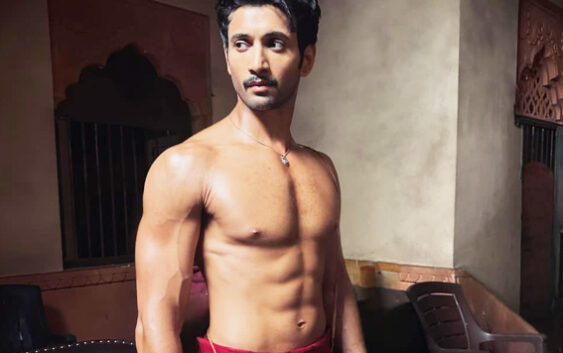
Rohit Saraf has been making some serious waves with the recently released period drama series, The Revolutionaries, helmed by director Nikkhil Advani. With this project, the actor takes a sharp detour from romantic, urban characters that the audience have come to associate him with. This time, Saraf steps into the shoes of a freedom fighter, Sachindranath Sanyal, a role that required him to undergo intense physical transformation to embody the resilience of a young freedom fighter.
Saraf says the physicality was just one part of Sanyal. “I knew very early on that if I only looked stronger, it wouldn’t necessarily make me believable as Sachin. I had to feel different in my body. There was a certain sturdiness I associated with him, not just physical strength, but the sense of someone who could withstand discomfort. These were young men living under extraordinary circumstances. They were constantly on the move, training, hiding, fighting, surviving with very little, and still carrying on. I wanted some of that resilience to become instinctive rather than something I had to perform,” he says.
Saraf brought a mix of strength training, kalaripayattu and conditioning to bring agility to his portrayal. He states that the process helped his change his approach to his character. “Kalari and the action training helped enormously with that because gradually you stop thinking about your body and simply start using it differently,” he mentions and adds that the training regime came with a reality check.
“Honestly, for a while I felt like I had accidentally signed up to become an athlete! There was strength and conditioning with Tejas, Kalari, action rehearsals, movement training, dance rehearsals etc. then obviously I still had to go and do my actual job at the end of all of it. The funniest reality check was discovering that being able to lift heavy in a gym means absolutely nothing when someone asks you to do Kalari. Suddenly you’re on the floor questioning every claim you’ve ever made about being fit.”
Through the journey, Rohit found out that each discipline brought something unique to the character. “I loved that part of it. Every form of training was teaching my body something different. The gym gave me the size and strength, Kalari gave me agility and control, and the action training taught me how to actually use all of it. Eventually I wasn’t thinking about any of those things separately anymore, which was exactly where I wanted to get.”
Speaking of bringing changes to his diet, he continues, “People assume the hardest part of a transformation is starving yourself, but there was a phase where I had to eat so much that I genuinely never wanted to see another meal again. Imagine being completely full and knowing there’s another box of food waiting for you. And then, of course, you get used to eating like that and they decide it’s time to cut your calories. So you’re basically never happy.”
For him, the physical transformation became a source of motivation in itself. “But the transformation itself was quite addictive to watch. Every few weeks there would be something new…the clothes would fit differently, I’d wake up and randomly find a new striation on my body I never knew existed. I’d see a shot from training and think, ‘okay, this is actually happening and it’s working.’ While it made me more confident as a human, not just an actor, but physically I started feeling capable of things I hadn’t been capable of before. And that’s a really fun feeling to take onto an action set.”
“I think the stronger I became physically, the less I felt the need to make him emotionally closed. That was an important discovery for me because my initial instinct could easily have been to equate a revolutionary with aggression or toughness. But the more I read about Sachin and the more we worked on him, the more fascinated I became by how deeply emotional he was. His conviction didn’t exist because he was devoid of fear, tenderness or innocence. It existed alongside all of those things. There’s something almost childlike about believing in an idea so completely that you’re willing to reorganise your entire life around it. And yet the consequences of that belief were incredibly adult…prison, violence, separation, loss and revolution,” he continues.
He adds, “That contradiction became one of my favourite things about playing him: someone who could be incredibly vulnerable and still completely immovable when it came to what he believed was right.”
Speaking about the shift from boy-next-door to an intense Sachindranath Sanyal, Saraf says, “Most people had seen me do certain kind of parts before and I understand why Sachin wouldn’t necessarily be the first character somebody would associate with me. That thought itself became quite exciting, I had an opportunity to challenge the typecast. And that became my driving force. I think what I’ve realised is that there really are no limits as an actor as long as there is belief. And it’s incredible when that belief comes from your director to begin with. When somebody sees you as capable of something before you’ve even had the chance to prove it to yourself, the whole experience becomes so much more enjoyable.”
Revealing his takeaway from The Revolutionaries, Saraf says, “If there’s one thing I’d like to take from this project into whatever I do next, it’s that belief…that I can take on absolutely anything if I’m willing to put the work in.”
Saraf’s trainer, Tejas Lalwani, says, “Rohit’s discipline was next level. Over the 15 months of training, he was always on time, no matter what. 10 reps, 20 reps, 50 rep, he just executed. Whether he was eating 3,500+ calories to build or shredding on sub-1,800 calories towards the end, there wasn’t a single complaint. He was essentially living the life of a Men’s Physique competitor while carrying an actor’s workload- emotional script readings, long hours, erratic night shoots, and learning multiple art forms like kalari, laathi and kushti and Malakham or dance rehearsals at the same time. During the peak phase, when we depleted and then carbed him up, there’s always some uncertainty around exactly how the body will respond since this was his first time. But his body responded better than we could have hoped. I genuinely watched him transform in front of my eyes from Rohit into Sachindranath Sanyal. He looked so striking that what was initially planned as one or two body shots evolved into multiple scenes. If I can take the liberty of saying this, I think the transformation gave the director a lot more to play with visually than we had originally anticipated. Physique building is a slow, boring and monotonous job. Same food, same lifts, same routine every single day and it’s literally copy-paste. But that daily commitment gave us an iota of progress every morning. He went from hiding his face in check-in pictures to proudly sending me flex updates on WhatsApp. The best part is that we did it clean. No stacks, no drastic salt cuts, no diuretics. Just real food, plant protein, fish oil and creatine monohydrate. Nothing fancy, just consistency, discipline and an insane amount of work. Rohit makes my job as a coach look easy.”
Meanwhile, The Revolutionaries brings together Rohit Saraf, Pratibha Ranta, Bhuvam Bam and Gurfateh Pirzada in a period drama series that revolves around India’s pre-independence era and British Raj. Directed by Nikkhil Advani, The Revolutionaries has been receiving immense praise from the audience for its novel plotline and for offering a peek into the world of India’s pre-independence era with compelling performances by the formidable star cast.