- Vivriti Asset Management Marks Successful Exit of Vintage II funds; ₹3,400 crore returned since inception
- विवृति एसेट मैनेजमेंट ने विंटेज-II फंड्स से सफलतापूर्वक किया एग्जिट
- DBS Bank India enables Customs Duty, Central Excise and Service Tax payments through ICEGATE 2.0
- Madhya Pradesh Well Positioned to Drive India's Next Wave of Growth: Mr Vir S. Advani, Chairman, CII Western Region
- भारत की विकास यात्रा के अगले चरण को गति देने के लिए मध्य प्रदेश पूरी तरह तैयार: श् वीर एस. आडवाणी, चेयरमैन, सीआईआई पश्चिमी क्षेत्र

Triptii Dimri Revives her True Acting Prowess in Maa Behen, Serves One of the Most Satisfying Performances & Re-establishes herself as the Nation’s Favourite Leading Lady
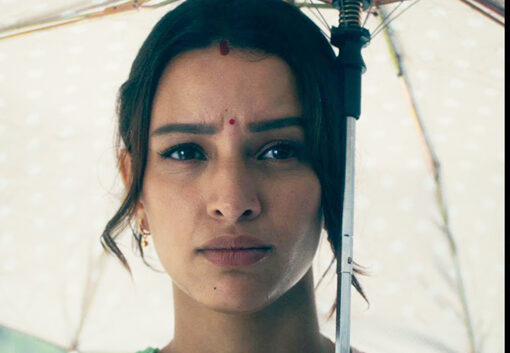
Maa Behen is making waves, and Triptii Dimri shows that she never left her form! She’s still the star everyone is rooting for. “Hum pachtayenge? Hum pachtayenge? Shaadi ke din se aajtak kitni roti bana chuke hai jaante ho – 1,27,755 exact!” – You know this scene, and you also know how truly satisfactory it felt to see her have enough! Jaya snaps after being an invisible daughter-in-law who only serves and keeps herself confined to the ‘adarsh bahu’ trope. She has counted every single roti she has made ever since she got married. One lakh twenty-seven thousand seven hundred and fifty-five, to be precise. And then, she brings up his low sperm count — ” parmanu mand ,” she calls it. And then comes the chappal move, one of the most satisfying scenes to watch in Hindi cinemas this year.
Darkly funny, furious and nearly speaking the minds of all those women facing such marital conformities. The only reason why the scene landed perfectly and on the spot is because of the actor playing it with commitment, sans fear. Triptii Dimri aced it, and how, reestablishing her as the nation’s favorite leading lady.
After nearly losing Dimri to the Animal machine, it nearly seems she’s arrived with a bang! Sandeep Reddy Vanga’s blockbuster ignited a loud conversation around Triptii Dimri, but it wasn’t particularly kind towards her. Her character was largely defined by how the male lead related to her, and that sparked a debate about female representation in Bollywood. Considering that the film was enormous, it nearly swallowed Triptii’s conviction. Animal worked, it offered her opportunities – and from an industry point of view, it fueled her career.
But what felt off was Triptii Dimri – as seen in Animal – didn’t fully mirror the actor we’d seen in her classics like Laila Majnu, Bulbbul and Qala. In Bulbbul, her role demanded that she convey a woman’s pain mainly through expressions and silences, with minimal dialogue. And then in Qala too, she served a performance with impressive maturity for an actor still rising in her career. These films proved that she can anchor heavy narratives on her own. But somewhere in between after Animal, it seemed like the industry was shrinking her to a one-dimensional image that didn’t justify her acting dynamics.
But now, Maa Behen brought a sharp shift in the narrative and reinforced her appeal as a rare star loved across audiences. That roti monologue excels because it blends humour with pent-up rage, frustration – and a satisfactory transition from a silent, suffering bahu to a woman who not only demands divorce on the face of her on-screen husband but backs it with proofs. Her silence and endurance in the previous stills makes it even more justified. And Triptii focuses on the work, the build-up that goes behind bringing life to the outburst. The thing about Dimri is that she’s always been the actor to shoulder such narratives – and it seems like Maa Behen is the reminder we needed to see her full potential once again!